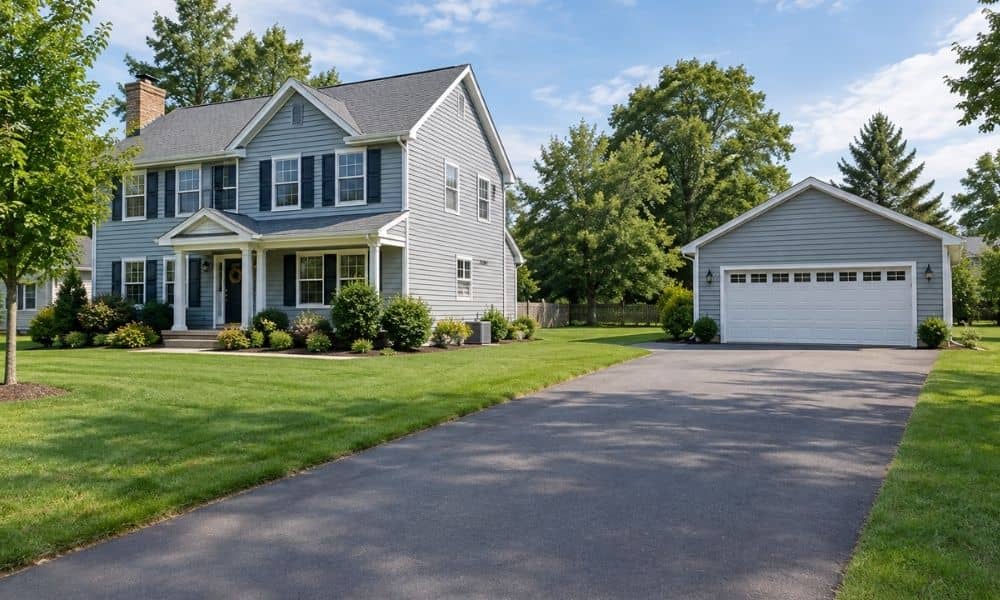
A detached garage sits apart from the house. That separation can raise questions before a residential loan closes. A loan closing survey shows the property and its buildings so everyone in the deal has an accurate picture of what’s there. When a home has a detached garage, that garage needs the same attention as the house. Sometimes it needs more, since older garages weren’t always built or recorded with the same care as the main house.
This matters because closing dates depend on accurate paperwork. If a question comes up late about a garage’s location, its access, or a nearby easement, that question can slow things down right when a buyer and seller want to finish.
Why a Detached Garage Deserves Separate Attention at Closing
A detached garage is its own structure on the same lot. A loan closing survey usually needs to show it along with the house and any other relevant features. Closing surveys and mortgage-type surveys commonly document buildings in relation to the property. Leaving out a detached garage usually isn’t an option.
Older homes often have garages that were added years after the main house was built. Some sit close to a rear property line. Some went up before current setback rules existed, or before certain permits were standard practice. None of this is automatically a problem. But it does mean the surveyor needs current, accurate information. Old plats or deed language may not show the garage at all.
Owners should also mention any changes made to the garage since its last survey. A new roofline, an added carport, or a covered walkway connecting the house and garage can all change what needs to be shown.
How the Garage Sits Relative to Property Lines
One of the first things a loan closing survey needs to check is where the detached garage falls compared to the property lines. This tells the lender and title company if the garage sits fully inside the lot. It also shows whether any part of it comes close to, touches, or crosses a boundary line.
This step matters more for garages than it does for a deck or a shed. Garages are permanent structures with real value. Their placement can affect how a lender views the property as collateral. A garage that seems to cross into a neighbor’s lot, even by a little, is the kind of detail a title company wants resolved before closing. Nobody wants it discovered after closing.
Rear-yard garages are common in older neighborhoods. Many face an alley instead of the front street. This layout can affect how boundary lines are read near the back of the lot. That’s one more reason the survey needs to reflect current field conditions instead of assumptions based on the house’s front address.
When Easements Intersect the Detached Garage Area
Recorded easements for utilities, drainage, or shared access sometimes run through the part of a lot where a detached garage sits. This happens often on older lots, where utility lines went in before backyard structures were built. A loan closing survey should point out any recorded easements that affect the garage or the ground around it.
An easement doesn’t automatically stop a loan from closing. But it does need to be documented and understood by everyone in the deal. If a garage was built without full knowledge of an existing easement, that’s useful information for a lender and title company to have early. It shouldn’t surface after the loan has already funded.
Alley-facing garages can sit near utility easements tied to the alley itself. Owners who know or suspect there’s a recorded easement near their garage should tell the surveyor early. They should also share any related documents they can find.
Garage Access Can Matter Beyond the Building Footprint
A loan closing survey isn’t only about where the garage sits. It can also need to show how the garage is reached, especially when access runs through an alley, a shared driveway, or a recorded access agreement with a neighboring property.
Some homes use rear alley access for detached garages instead of a driveway connected to the front street. When that’s the case, the survey may need to show how that access point relates to the lot and to any recorded rights of way. A shared driveway between two neighboring homes can raise similar questions. This is especially true if the arrangement was never formally recorded or has changed informally over time.
Confirming access details early helps avoid a situation where a lender or title company asks about garage access and the survey doesn’t cover it. That kind of gap can add time to the closing process.
Questions to Resolve Before the Survey Reaches the Lender
Before a loan closing survey moves forward, a few questions are worth sorting out first.
- Has the garage been changed, expanded, or connected to the house since any earlier survey?
- Are there known or suspected easements running through or near the garage?
- Does the garage rely on alley access, a shared driveway, or another setup that should be documented?
- Are prior surveys, plats, or deed records available for the surveyor to review?
- Has the lender or title company said what the survey needs to show about detached structures?
Working through these questions with a surveyor helps prevent last-minute surprises. So does confirming requirements with the lender or title company early. Every transaction is a little different. What a specific lender or title company needs can vary, so it’s worth checking survey requirements early rather than assuming one standard approach applies.
Frequently Asked Questions
Can a detached garage be included on a loan closing survey?
Yes. Depending on the survey scope and lender or title requirements, detached buildings can be shown along with the house and other relevant property features. Closing surveys and mortgage-type surveys commonly document improvements in relation to the parcel.
Does an attached carport change the survey considerations for a detached garage?
It can. A later-added carport, covered connection, or similar change may affect the footprint that needs to be shown. Owners should tell the surveyor about any changes that may not appear in older records.
Should an older garage survey be reused for a new loan closing?
That depends on the lender, the title company, the age of the survey, and whether the property has changed since then. Owners should confirm this is acceptable with their lender or title company before relying on an older document.