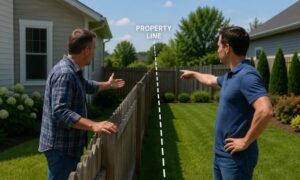
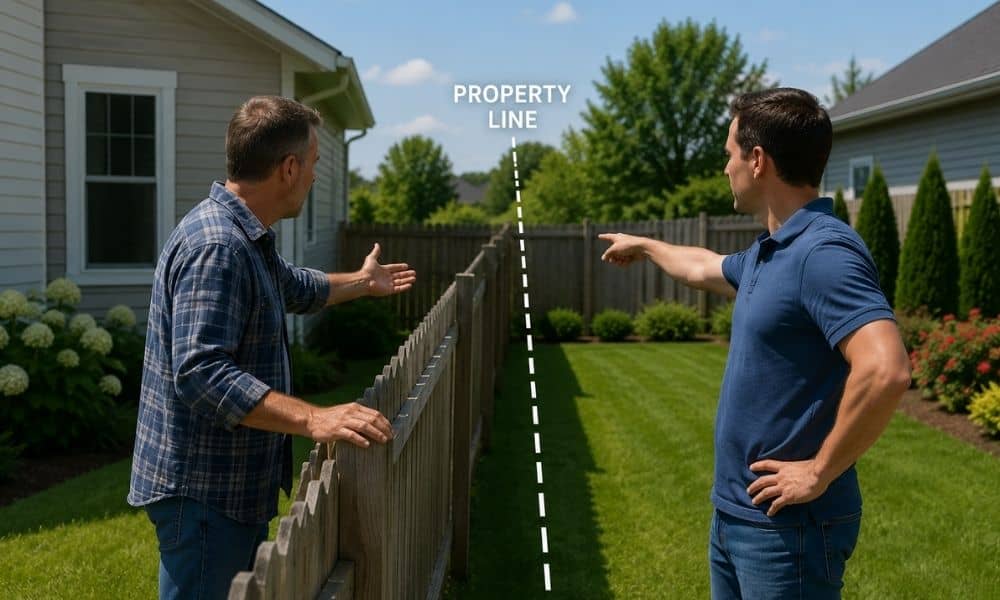
Property line disagreements happen every day. They are not always caused by bad intentions. In Kansas, many boundary disputes start with something simple. An old fence, an assumption passed down by previous owners, or a landscaping project that crept a little too close to the edge. Whatever the cause, a disagreement over a property line can grow fast if it is not handled carefully. Knowing what to do and what to avoid early on can make a big difference in how things get resolved.
Why Property Line Disagreements Happen More Often Than You Think
Most boundary disputes do not start with someone trying to take land that is not theirs. They start with confusion.
Common causes include:
- Aging fences. A fence put up decades ago may have been placed based on a guess rather than a survey. Over time, that fence becomes the assumed boundary even if it is in the wrong spot.
- Outdated assumptions. Buyers often inherit the beliefs of past owners about where the line is. If those beliefs were never checked, they may be wrong.
- Landscaping projects. A tree planted near what someone thought was their property edge, or a garden that slowly grew outward, can cross a boundary without anyone meaning for it to happen.
- Inherited property. When land passes through an estate, boundary information is not always clearly shared with new owners. Gaps in knowledge lead to gaps in understanding.
- Conflicting property records. Some older deeds use descriptions that do not clearly match current conditions. When two neighbors each read their documents differently, disagreement follows.
Most disputes come from misunderstanding, not bad intent. Keeping that in mind helps set the right tone for working things out.
What Evidence Carries the Most Weight During a Boundary Dispute?
When a boundary disagreement goes beyond a conversation, evidence becomes the foundation for any solution. Not all evidence carries equal weight.
Recorded plats and deeds. These are the legal documents that define property boundaries. A recorded plat shows how a subdivision was laid out. A deed describes the legal boundaries of a specific parcel. These are the starting point for any boundary review.
County records. County assessor and recorder offices in Kansas keep property records that can help show how a parcel has been described and passed from one owner to the next. These records can reveal historical boundary information that supports one side over another.
Historical documents. Older surveys, field notes, and records from past transactions can provide useful context. This is especially true for properties that have changed hands many times.
Professional survey documentation. A boundary survey done by a licensed land surveyor carries a lot of weight. Surveyors compare deeds, plats, historical evidence, and physical monuments to find the most accurate boundary location. Their findings are documented and can be used in legal proceedings if needed.
Physical monuments. Iron pins, concrete monuments, and other markers set by licensed surveyors are on-the-ground reference points. Whether they are present, missing, or moved can all matter in a dispute.
Evidence is judged by how well it connects to the legal record, how recently it was prepared, and how accurately it reflects current conditions. A visual guess carries far less weight than a professionally documented boundary.
Steps Property Owners Should Take Before the Dispute Escalates
The early stages of a boundary disagreement are the best time to fix it. Once things harden into a formal dispute, options get fewer and costs go up.
Talk respectfully with your neighbor. Start with a calm conversation. Share your understanding of the boundary and listen to theirs. The goal at this stage is to understand the disagreement, not to win.
Gather your documents. Pull together your deed, any existing survey papers, and records from your closing. Review what they say about your boundary. This gives you a factual base for the conversation.
Do not make changes on your own. Do not move a fence, remove a marker, or make improvements near the disputed area until the question is resolved. Acting on your own before the boundary is confirmed can make things legally complicated and strain your relationship with your neighbor.
Keep written records. Write down conversations, dates, and any agreements made along the way. If the dispute grows, a clear paper trail helps show what was said and when.
Talk to a licensed land surveyor. A professional boundary survey gives both parties an objective, documented reference. It may confirm your understanding, show a different picture, or bring up information neither side had. Either way, it replaces guesswork with facts.
When Mediation or Legal Action May Become Necessary
Some disputes do not get resolved through conversation alone. When informal talks fail, other options exist.
Mediation. Mediation brings in a neutral third party who helps both sides reach a voluntary agreement. It is usually faster and less expensive than going to court. Many counties have mediation resources for property disputes. It works best when both parties are willing to participate in good faith.
Quiet title action. A quiet title action is a legal process used to establish clear ownership or resolve competing claims to a property. If a boundary dispute involves overlapping claims or unresolved title questions, this may be the right legal step. It requires an attorney and goes through the court system.
Court involvement. When other methods fail, boundary disputes can end up in court. A judge reviews the evidence, including deed descriptions, survey documents, and historical records, and issues a ruling. Court takes time, costs money, and has uncertain outcomes. Most property owners prefer to resolve things before reaching this point.
Talking to a real estate attorney early, before things escalate, helps property owners understand their options and make informed choices.
Preventing Future Property Line Conflicts After the Issue Is Resolved
Resolving a boundary dispute is only part of the work. Preventing the same problem from coming back matters just as much.
Write down any agreements reached. If you and your neighbor agree on the boundary, put it in writing. A recorded boundary line agreement makes the resolution part of the official property record. It is not just a verbal understanding that future owners may never hear about.
Update property records when needed. If the dispute showed that existing records were unclear or wrong, work with a licensed surveyor and an attorney to fix the documentation. Clean records protect everyone, including future buyers.
Talk to your neighbor before installing anything near the boundary. Before building a fence, adding a structure, or doing any work close to a property line, let your neighbor know. A short conversation before construction starts prevents the kind of surprise that leads to disputes.
Keep clear property documents for future owners. Store your deed, survey documents, and any recorded agreements in a safe place. When the property changes hands, that documentation gives the next owner a clear picture of the boundary and its history.
Taking these steps turns a resolved dispute into a lasting fix rather than a problem waiting to come back.